Storm Damage in Spiceland, IN
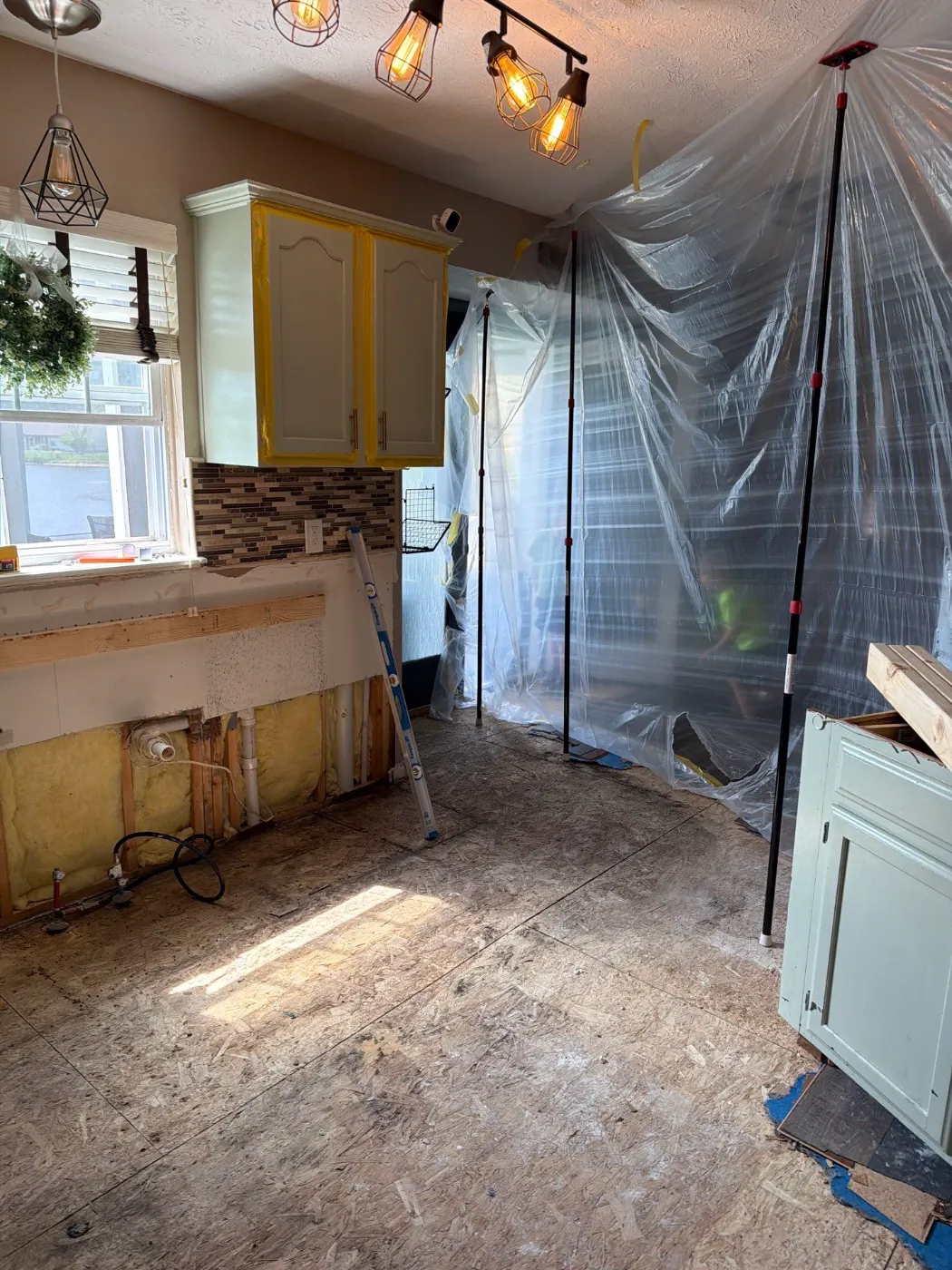
Soaked attic insulation in Spiceland removed where the readings call for it, with the framing dried underneath.
Spiceland Water Restoration delivers Storm Damage across Spiceland and surrounding areas with certified crews available 24/7 and every step documented for insurance. Call (463) 241-6041.
- Service: Storm Damage for Spiceland homeowners
- Service area: Spiceland, IN and surrounding areas
- Response time: Same day emergency response for Spiceland; 24/7 availability
- Licensed and insured (License #RC21100059)
- Serving Spiceland, IN since 2018
Storm Damage Cleanup in Spiceland
After a storm in Spiceland, we'll cover the opening first and then dry out what got wet.
Storms Here
Severe thunderstorms come through in spring and summer, and the occasional tornado comes with them. If your insurance company asks for a storm date, NWS Indianapolis keeps a list of past events.
Where Storm Water Ends Up
With full basements common here, a big storm can bring water in from below as well as through the roof. That makes it a basement flooding job too.
After a storm we can be anywhere in Spiceland, from the Main Street District to the roads around Spiceland Town-Township Public Library and Tri Junior-Senior High School. We also handle storm damage in Carthage, Knightstown, New Castle and Charlottesville.
Expert Storm Damage for Spiceland Homeowners
Surface water that rises fast finds the lowest opening in your house, which is usually a basement window well, a sill plate, or the slab edge of an attached garage. It carries soil and whatever was sitting on the ground with it, so it calls for a stricter cleanup than a clean supply line break would. Spiceland Water Restoration dispatches to storm flooding calls in Spiceland within 2 hours with extraction pumps and the containment that contaminated water requires.
Ask any company that bids your storm damage to show the readings behind its scope. Spiceland Water Restoration puts a reading or a photo behind every line, from the tarp to the last ceiling patch in your Spiceland home. If another bid replaces more ceiling or more insulation, those readings are the way to compare the two apples to apples.
Attic work on a storm loss is hands and knees with a probe. Spiceland Water Restoration technicians read insulation at depth, check the underside of the sheathing, look at the top plates where water collects and sits, and mark wet zones with tape so nothing gets missed when the removal crew comes through. Soaked batts and matted blown in get bagged and carried out, since they won't dry in place.
Insulation is easy to lose track of once it's in a dumpster, so it gets documented carefully. Spiceland Water Restoration records the type, depth and square footage of everything that comes out of your Spiceland attic, photographs it in place and bagged, and notes the R value the replacement has to match. That record stays in your photo report for whatever you decide.
If you smell damp air every time it rains, something in the assembly's still holding water. Spiceland Water Restoration will find it, show you the readings, and dry it out. Crews dispatch to Spiceland at any hour, and you get the photo report the same day.
Signs You Need Storm Damage Restoration
If you notice any of these in your Spiceland home, schedule a free inspection before the issue worsens.
Window or door trim swollen and sticking that opened and closed fine last week
Ceiling texture cracked in a straight line that follows a joist or a roof truss
Ceiling drywall sagging or bulging between the joists in a room below the attic
A brown or yellow ring on a ceiling that got noticeably bigger after the last heavy rain
Interior door frames swollen so the door rubs or won't latch
Damp, earthy air when you open the attic hatch or pull the attic ladder down
Clothes or boxes against an outside wall that feel damp after wind driven rain
Daylight visible through the roof sheathing when you look up from inside the attic
Silt left on the garage floor or mudroom tile after runoff pushed in
A musty smell that comes back in the same room after every rain and fades in between
How Spiceland Water Restoration Handles Storm Damage
We follow these steps in order on every Spiceland job.
Storm Call Intake
The first call covers where you see water, whether the power is on, how long it's been coming in and what's already been moved. Those answers decide what gear goes out and what to do before the crew gets there.
Sump and Drain Check
The crew looks at the sump basin and the floor drains to see whether water is still entering or backing up. Anything that needs a plumber or an electrician gets noted, so the basement isn't refilling while the drying runs.
Water Extraction
Standing water gets pumped and extracted before there's any drying equipment in the room. Hard floors are squeegeed and extracted, saturated carpet pad is pulled, and carpet gets detached to reach the subfloor. Water that came in at grade also gets an antimicrobial treatment once the soaked material is out.
Cleaning Surfaces That Stay
Framing and hard surfaces that stay get cleaned and treated with an antimicrobial once the soaked material is out. Cleaning comes before the drying equipment goes in, so the air movers aren't pushing soil around the room.
Attic and Cavity Drying
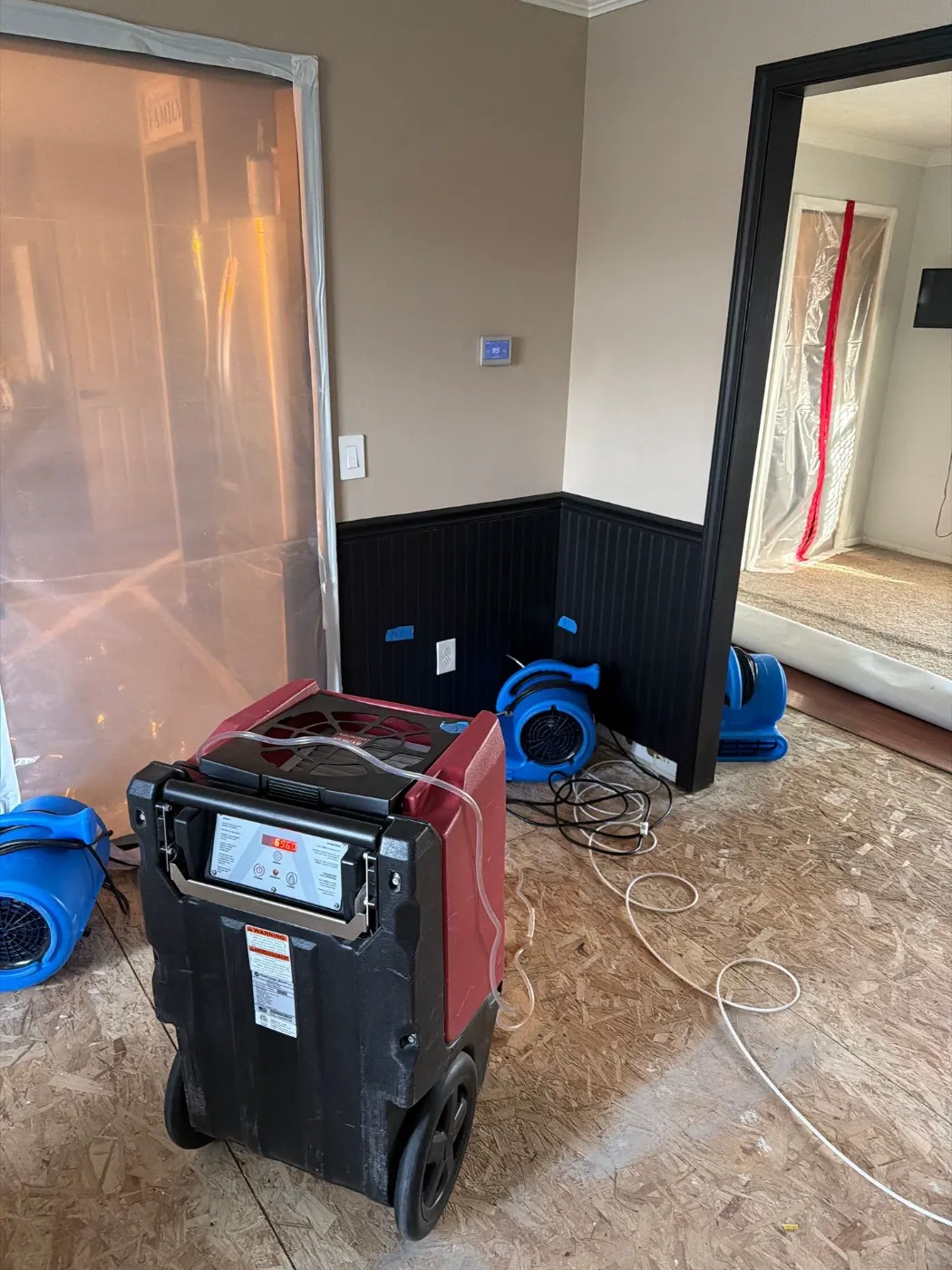
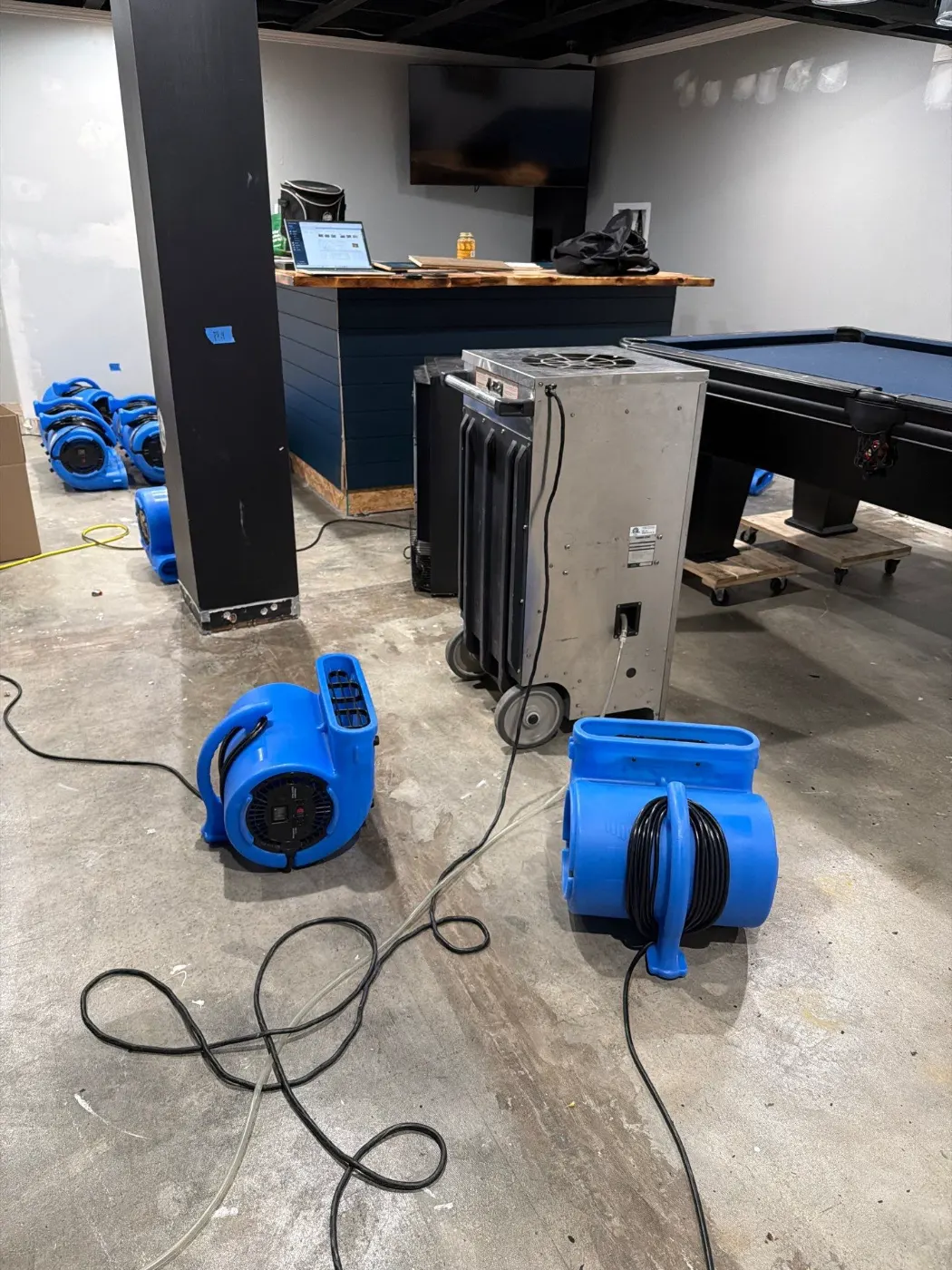
Air movers aim at wet surfaces, dehumidification is sized to the containment volume, and negative air cavity drying runs through small ports where a ceiling or wall doesn't have to come down to dry. Humidity gets tracked inside and outside the drying area.
Storm Damage in Spiceland
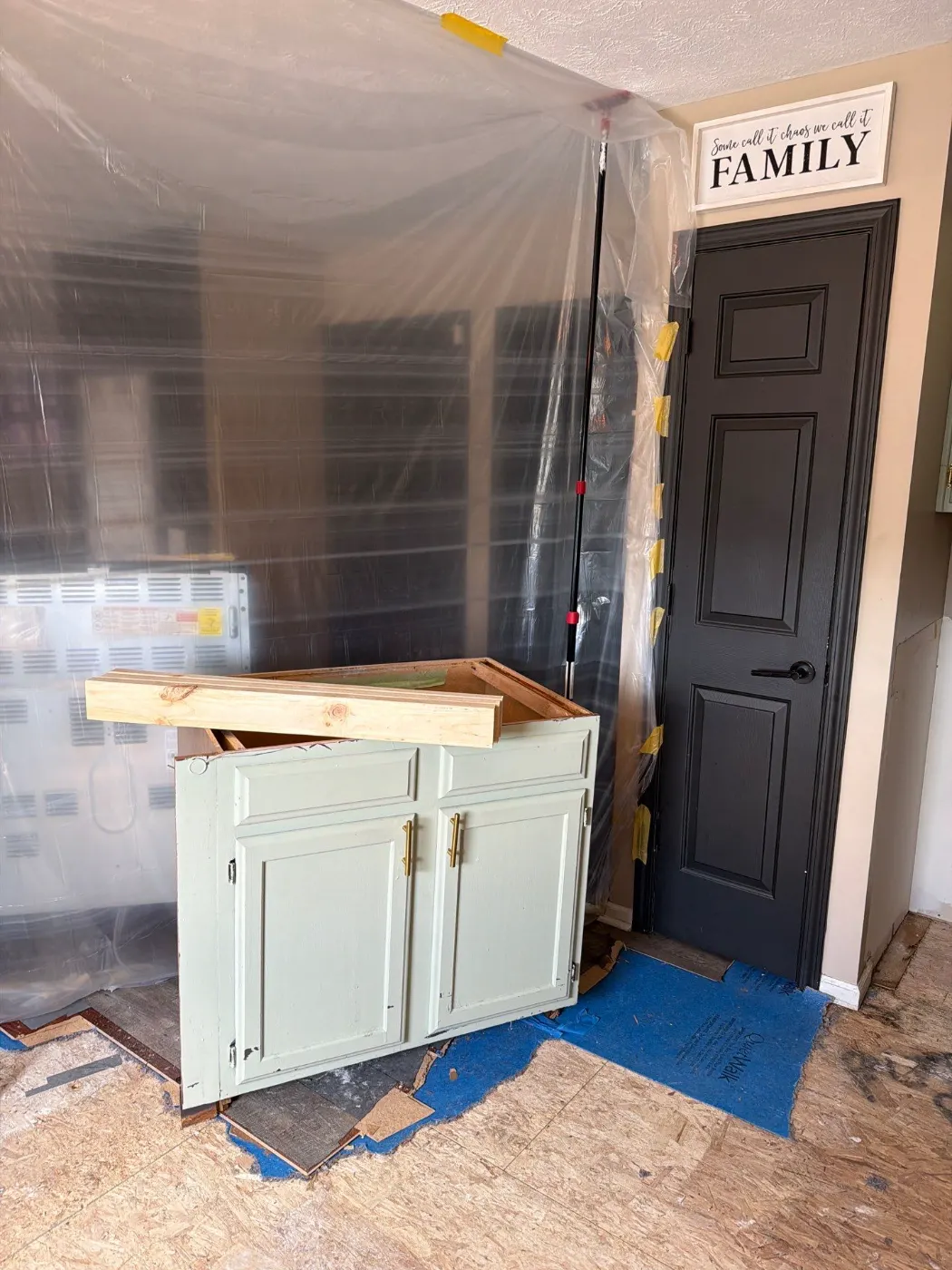
Photographs from real storm damage jobs completed by our crew in Spiceland and surrounding areas.

Storm Damage FAQ
Questions Spiceland homeowners ask us about storm damage restoration.
Guidance and Standards for Storm Damage
- The National Weather Service office in Indianapolis posts summaries of recent central Indiana storm and flood events. NWS Indianapolis Event Summaries
- The Indiana Department of Insurance advises against permanent repairs before your insurance company inspects the damage. Check your own policy for what it covers. Indiana Department of Insurance: Insurance Claim Tips
Spiceland Neighborhoods We Serve
We take storm damage calls in every part of Spiceland. Pick your neighborhood for local details.
Other Restoration Services in Spiceland
Spiceland Water Restoration handles the full scope of restoration work. Explore our other services below.
Water Damage Restoration in Spiceland
24/7 emergency response. IICRC certified water restoration from extraction to full dry out.
Learn more →Basement Flooding in Spiceland
Basement water emergencies handled fast. Extraction, drying, mold prevention.
Learn more →Sewage Cleanup in Spiceland
Category 3 biohazard cleanup. Full containment, decontamination, structural restoration.
Learn more →Request Storm Damage Restoration
Reach Us Directly
Our team is available 24/7 for emergencies and ready to schedule inspections during business hours.
Need Immediate Help?
For active water or mold emergencies, call us directly. We are available 24/7.