The Saturday Night Call That Beat the Clock
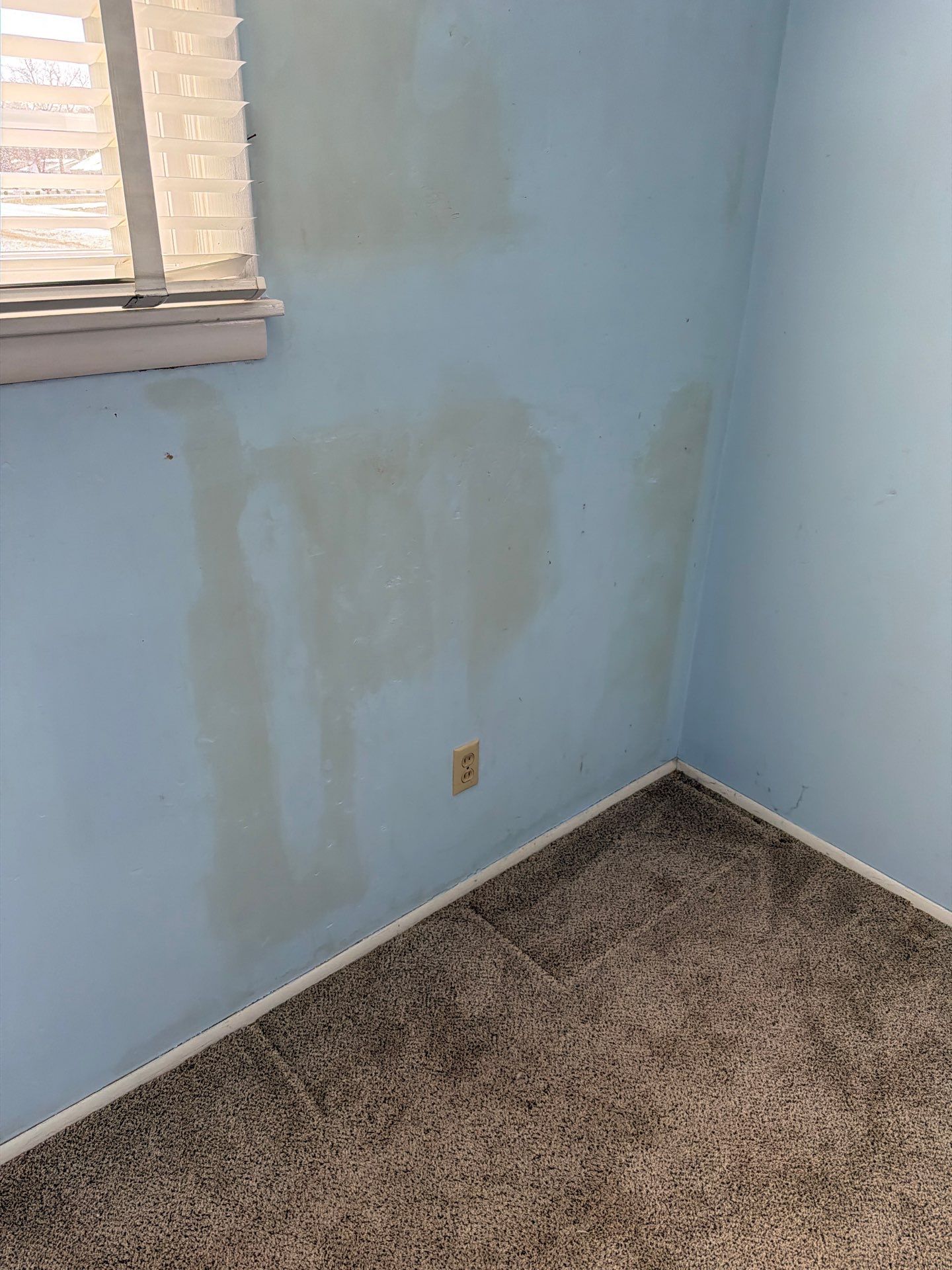
Back to that homeowner in Main Street District (Downtown Spiceland). She called at 9:47 pm. Our on-call tech was at her door by 11:15 pm with truck-mounted extraction, an infrared camera, and six air movers. The supply line had been weeping for maybe four hours before she noticed. Category 1 water, clean source, but it had already wicked twelve feet up the drywall and saturated the carpet pad in two rooms.
Here is what mattered. We pulled standing water inside the first hour, lifted carpet, removed pad, and had 18 air movers and 2 commercial dehumidifiers running by 1 am. Forty hours later, moisture meters on every wall cavity and subfloor section read within 2 percent of the dry standard. No demolition beyond the pad. No mold. Her insurance claim closed at roughly $4,200. Had she waited until Monday morning to call, we estimate that same job runs $11,000 to $16,000 with drywall removal, antimicrobial treatment, and contents cleaning. The 48 hour rule paid her back about $10,000 in one weekend.
The Lake House That Sat for Nine Days
Different story, same county. A Spiceland family used a property as a weekend rental. A toilet supply line let go on a Sunday after checkout. Nobody walked in until the following Tuesday week. Nine days of standing water in a half bath spreading into a hallway and bedroom.
By the time we arrived, the smell hit before the door opened. Black and green growth covered the bottom 18 inches of drywall in three rooms. The subfloor had cupped. HVAC return ducts had pulled spores into the upstairs supply, so we found surface growth on bedroom ceilings on the second floor. This was no longer a water job. It was a full mold remediation under containment, and we walked them through our process for mold after water damage removal and prevention before we touched a tool. Final cost ran north of $28,000 between remediation, reconstruction, and air quality testing. Insurance covered part of it. The long sit cost the rest.
What stuck with me on that job was the rental income piece. The owners lost roughly six weeks of bookings during remediation and reconstruction. At their nightly rate, that was another $9,000 to $11,000 of pure opportunity cost on top of the repair bill. A water sensor with a cellular alert (about $80 installed) would have caught the toilet leak inside the first hour. We now recommend leak sensors at every supply connection in any property that sits empty more than three days at a stretch.
What We Look For When We Walk In
When our team arrives on a Spiceland water loss inside the first 24 hours, we are checking specific things to keep you out of mold territory:
- Moisture readings on drywall, baseboards, subfloor, and any wood framing within 10 feet of the source
- Infrared imaging to find migration paths you cannot see, especially up walls and across ceilings
- Relative humidity in the affected rooms and adjacent spaces
- Source verification, because drying around an active leak is wasted work
- HVAC status, since running the system can move spores fast once growth starts
The Insurance Side of the 48 Hour Rule
One detail homeowners miss. Most policies cover sudden and accidental water damage, but mold coverage is often capped or excluded if the carrier decides you failed to mitigate promptly. We have seen adjusters point at delayed response as the reason for a denied mold claim. Calling a professional within 24 to 48 hours and documenting the response is part of how you protect the claim itself. If you want to understand what your policy likely covers, our breakdown on whether homeowners insurance covers water damage spells out the common language.
One last note from the field. Spiceland Water Restoration keeps timestamped photos, moisture logs, and drying records on every job, and we hand that file to the adjuster directly. On the Main Street District (Downtown Spiceland) job that opened this article, that paperwork is what kept the claim clean and fast. Documentation is not paperwork for its own sake. It is the proof that you beat the 48 hour window, and it is often the difference between a covered loss and an argument you do not want to have.
The Crawl Space Nobody Checked
A homeowner in a 1960s ranch called us six weeks after a slow drip from a hall bathroom. The visible damage looked minor. A small stain on the ceiling below. He had patched the supply line himself and assumed he was fine. He was not.
We pulled the crawl space hatch and found the underside of the subfloor covered in white and gray growth across roughly 140 square feet. The fiberglass insulation was soaked and sagging. Joists showed surface mold. The leak had been small but constant, and the crawl space humidity had stayed above 70 percent for the entire six weeks. We ran the job as a contained remediation with HEPA filtration, removed insulation, treated framing, and installed a dehumidifier to keep relative humidity under 55 percent going forward. Total: about $9,800.
The lesson from his job is one we repeat often. The 48 hour rule is not just about visible water. Hidden moisture in wall cavities, under cabinets, behind baseboards, and in crawl spaces resets the clock every time the meter reads wet.
What Changes Between Hour 24 and Hour 72
People ask why a day or two matters so much. The honest answer is biology plus building materials. Inside the first 24 hours, you are dealing with water that has soaked into porous materials but has not yet fed microbial activity at scale. Between 24 and 48 hours, spores germinate. Between 48 and 72 hours, colonies become visible to the naked eye and start releasing more spores into the air, which is when cross-contamination to dry rooms begins.
Temperature plays a role most homeowners do not consider. A Spiceland basement sitting at 68 degrees with 80 percent relative humidity is essentially a culture dish. Bump that ambient temp into the mid 70s, which happens fast when the HVAC keeps running and the windows stay shut, and germination times can tighten by 8 to 12 hours. We have walked into jobs at hour 36 that looked more like hour 60 because the thermostat never moved.
The water category matters too. Clean water from a supply line behaves differently than a sewage backup, where bacteria accelerate everything. If you want the full breakdown on water types, our piece on Category 1 vs Category 2 vs Category 3 water damage walks through it.